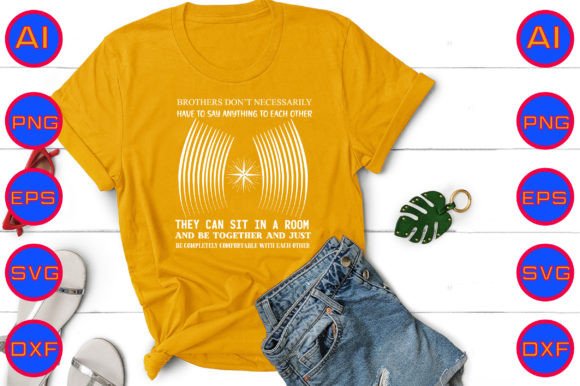
Reviewing Brothers Don’t Necessarily Have to Say a
As an embroidery designer who has spent years digitizing patterns and troubleshooting stitch-outs for clients, I approach every new machine embroidery design with a mix of curiosity and skepticism. We have all seen designs that look stunning on a screen but turn into a tangled mess of thread breaks and puckering on the hoop. Today, I am taking a close look at Brothers Don’t Necessarily Have to Say a, a piece categorized under Freebies and Graphics. My goal is not just to admire the aesthetic, but to evaluate its viability for real-world embroidery projects, from custom client orders to small batch production for an Etsy shop.
First Impressions and Visual Personality
The first thing that strikes me about Brothers Don’t Necessarily Have to Say a is its understated confidence. In a market saturated with overly complex, dense patterns, this design relies on clean lines and negative space. The mood it creates is one of modern minimalism mixed with sentimental warmth. It does not scream for attention; rather, it invites a closer look. For an experienced eye, this suggests a layout that prioritizes readability and structural integrity over unnecessary detail.
The visual personality here is versatile. It feels equally at home on a rugged denim jacket as it does on a soft, neutral-toned nursery blanket. This adaptability is crucial for designers who need assets that can serve multiple niches. Whether you are targeting the holiday embroidery market with personalized gifts or creating year-round custom apparel, the theme resonates with a broad audience. It speaks to family bonds without being cliché, which is a significant selling point for handmade product creators who value authenticity.
Real-World Application: The Tote Bag Test
To truly understand how a design performs, I mentally place it in a specific production scenario. Imagine I am preparing a run of canvas tote bags for a local craft fair. I choose Brothers Don’t Necessarily Have to Say a because its linear nature complements the coarse texture of canvas. Unlike heavy fill stitch areas that can distort lightweight fabric, this design likely utilizes a balance of satin stitch borders and open spaces.
In this context, the design shines. On a tote bag, clarity is key. Customers browsing a booth need to read the message instantly. If the lettering or graphical elements are too intricate, they get lost in the weave of the fabric. Here, the simplicity ensures high visibility. Furthermore, for an Etsy seller, this type of design photographs beautifully. It creates a clean, professional look in printable mockup previews, helping to build buyer trust before they even purchase the finished product.
Technical Considerations for Stitching
While the aesthetic is promising, we must discuss the technical execution. Since this item is provided as part of a Freebies collection, we do not have immediate access to the native machine file formats like PES or DST in the description. Instead, we receive vector-based assets: an Ai file, an EPS file, and an SVG file. This is a critical distinction for embroidery professionals.
You cannot simply load an SVG or AI file into your embroidery machine. These are design assets meant for cutting machines like Cricut or graphic software like Adobe Illustrator and Corel Draw. To use Brothers Don’t Necessarily Have to Say a for embroidery, you must either digitize it yourself or ensure you have access to the proper conversion tools. If you are digitizing it, pay close attention to stitch density. Because the design appears minimalist, there is a risk of under-digitizing, which can lead to gaps in coverage on textured fabrics. Conversely, over-compensating with dense stitching can cause puckering on stretchy materials like sweatshirt fleece.
For those using the SVG for heat transfer vinyl or appliqué, the clean paths in the provided files are a major advantage. An applique design approach might be the safest bet for beginners. By using fabric patches for the solid elements and stitching only the outlines, you reduce thread consumption and minimize the risk of distortion on difficult fabrics.
Fabric Compatibility and Placement
Where should you avoid using this design? I would exercise caution with very thin, slippery fabrics like silk or rayon unless you are using a high-quality cut-away stabilizer. The structural integrity of the text relies on precise alignment. On curved surfaces, such as the front panel of a cap, the horizontal span of the phrase might require careful hooping to prevent arching. Always test on scrap fabric first. Check how the thread colors contrast against your background. A dark thread on a dark fabric will render the message invisible, destroying the impact of the personalized gift.
For baby embroidery items, consider the softness of the final product. If the design includes any dense satin columns, ensure they are not too wide, as wide satin stitches can feel stiff against sensitive skin. Using a softer polyester thread can mitigate this issue. For sweatshirt embroidery, the design’s openness works in your favor, allowing the plush texture of the fleece to show through without being overwhelmed by thread.
Commercial Value and Branding
From a business perspective, Brothers Don’t Necessarily Have to Say a adds value through its emotional resonance. It is not just a graphic; it is a statement. When used in commercial embroidery projects, it helps build a brand identity that values connection and subtlety. For small shop product lines, consistency is key. If this design fits your brand’s voice, it can become a staple item. However, always verify the licensing terms associated with free graphics. Just because it is a freebie does not automatically grant commercial rights for resale of the digital file itself, though finished physical items are often permitted. Read the creator’s terms carefully.
In conclusion, Brothers Don’t Necessarily Have to Say a is a strong candidate for designers who appreciate clean, meaningful aesthetics. It requires thoughtful preparation regarding file conversion and stabilizer choice, but the potential for high-quality embroidered patch work, apparel, and home decor is significant. It reminds us that in embroidery, sometimes less is indeed more.