Reviewing All These Flavors and You Want to Be Sal
As an embroidery designer who has spent countless hours staring at digitized files and troubleshooting tension issues, I approach every new machine embroidery design with a mix of curiosity and caution. We all know the drill: a file might look perfect on a screen, but the real test is how it behaves under the needle. Recently, I came across a playful graphic titled All These Flavors and You Want to Be Sal. It caught my eye not just for its humor, but for its potential in the current market of witty, personality-driven home goods and apparel.
This particular item is listed under Freebies and falls into the Graphics category, which means it arrives as a digital download including a ZIP file with SVG, DXF, EPS, and PNG high-resolution formats. For those of us who work primarily with cutting machines or print-on-demand services, these vector and raster formats are gold. However, for the embroidery community, this presents a unique challenge and opportunity. Since this is provided as a graphic asset rather than a pre-digitized embroidery file, it requires a thoughtful approach to translation from screen to stitch.
The First Impression: Mood and Layout
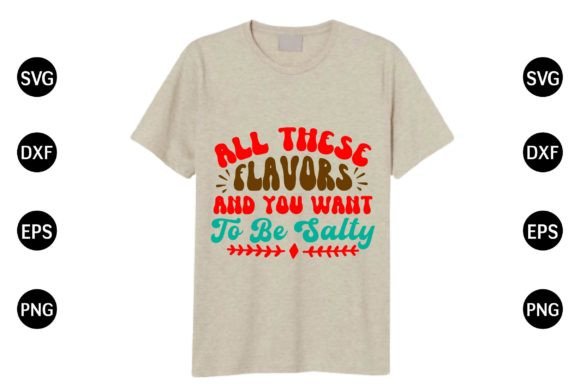
The phrase All These Flavors and You Want to Be Sal relies heavily on typography and attitude. The visual personality is bold, sassy, and unmistakably modern. When I first opened the PNG to inspect the resolution, I was looking for clean edges and balanced spacing. The layout feels compact enough to fit within standard hoop sizes, yet the lettering carries enough weight to stand out on textured fabrics. The mood it creates is one of casual confidence, making it an ideal candidate for projects that aim to spark conversation or add a touch of humor to everyday items.
For embroidery designers, the immediate question is how to interpret this graphic. Without a pre-made DST or PES file, we have the freedom—and the responsibility—to decide on stitch types. Do we go for a classic satin stitch border with a fill stitch interior? Or perhaps a more contemporary look using running stitch outlines for a hand-drawn aesthetic? The versatility of the source graphic allows for multiple interpretations, but each choice impacts the final stitch density and durability.
Real-World Application: From Screen to Sweatshirt
To truly evaluate this design, I imagined a specific scenario: creating a custom sweatshirt embroidery piece for a local boutique client. The client wanted something trendy for their spring collection, targeting young professionals who appreciate dry humor. I visualized placing the text across the chest of a heather grey crewneck. The contrast between the dark thread and the light fabric would be crucial here.
In this context, All These Flavors and You Want to Be Sal performs well because the message is short and punchy. Long phrases often get lost in the texture of fleece or cotton blends, but this design’s brevity ensures readability. If I were digitizing this myself, I would pay close attention to the kerning. Tight lettering can cause puckering, especially on stretchy fabrics. By adjusting the spacing and ensuring adequate underlay stitches, the design could sit flat and professional, enhancing the perceived value of the handmade product.
Beyond apparel, this graphic translates beautifully to home goods. Imagine it stitched onto a sturdy canvas tote bag design or a linen tea towel. In these applications, the durability of the stitch becomes paramount. A commercial embroidery approach would suggest using a higher density fill or a double satin stitch to withstand frequent washing. The humorous tone fits perfectly in a kitchen setting, turning a mundane item like an apron into a personalized gift that stands out at craft fairs or in an Etsy seller’s shop.
Navigating Technical Challenges
While the concept is strong, there are areas where caution is necessary. Since we are working from a graphic source (SVG/DXF/PNG) rather than a tested embroidery file, we must be mindful of small details. Tiny serifs or intricate curves in the font may not translate well if the hoop size is too small or if the needle count is too high. I recommend testing the design on scrap fabric first. This step is non-negotiable. It allows you to check thread color contrast and ensure that the stabilizer you choose provides enough support without adding unnecessary bulk.
Textured fabrics pose another challenge. If you plan to use this on a waffle-knit towel or a fuzzy blanket, the fine lines of the text might get lost. In such cases, simplifying the design or increasing the stroke width during the digitizing phase can help maintain clarity. Similarly, when working on curved surfaces like caps, the distortion caused by the curve can warp the text. Using a proper cap frame and adjusting the pull compensation in your digitizing software is essential to keep the letters legible.
Dark fabrics require special attention to thread choice. A standard black thread on a navy shirt will vanish. Instead, consider using metallic threads or high-contrast colors like white, yellow, or neon pink to make the embroidered patch or direct stitch pop. This attention to detail signals professionalism and builds customer trust, which is vital for any small shop product.
Enhancing Brand and Visual Appeal
The right design can elevate a brand. For creative entrepreneurs, All These Flavors and You Want to Be Sal offers a way to inject personality into a product line. It’s not just about stitching words; it’s about creating an emotional connection. When a customer sees this phrase on a baby embroidery onesie (perhaps adapted for a parenting joke) or a holiday-themed pillow, they smile. That smile translates to engagement, shares on social media, and ultimately, sales.
Using the included PNG for printable mockup creation is also a smart move. Before you even stitch a single thread, you can place the graphic on digital templates of shirts, mugs, or bags. This helps you visualize the scale and placement, allowing you to refine your design assets before committing to production. It saves time and materials, which is crucial for maintaining profitability in a craft business.
Practical Notes for Designers
Before you dive into your next embroidery project, keep these practical tips in mind:
- Check Licensing: Even though this is a freebie, always confirm the license terms. Can you sell finished items? Can you use it for commercial purposes? Clarity here protects your business.
- Test Stitch Density: If you digitize this yourself, start with a lower density to prevent fabric distortion, then adjust based on the fabric type.
- Contrast is Key: Always test your thread colors against the fabric. A quick black-and-white mockup can reveal if the design has enough contrast to be readable from a distance.
- Stabilizer Selection: Match your stabilizer to the fabric. Cut-away for stretchy knits, tear-away for stable wovens. This ensures the finished product maintains its shape after washing.
- Inspect Small Details: Zoom in on the SVG or DXF file. Look for any jagged edges or nodes that might cause stitching errors. Clean up the vector paths before digitizing.
In conclusion, All These Flavors and You Want to Be Sal is more than just a funny phrase; it’s a versatile graphic asset that, when handled with care, can become a standout element in your embroidery portfolio. Whether you are creating holiday embroidery gifts or stocking your online store with witty custom apparel, this design offers a solid foundation. By respecting the technical requirements of embroidery and leveraging the flexibility of the provided file formats, you can turn a simple digital download into a high-quality, sought-after product. Happy stitching!